
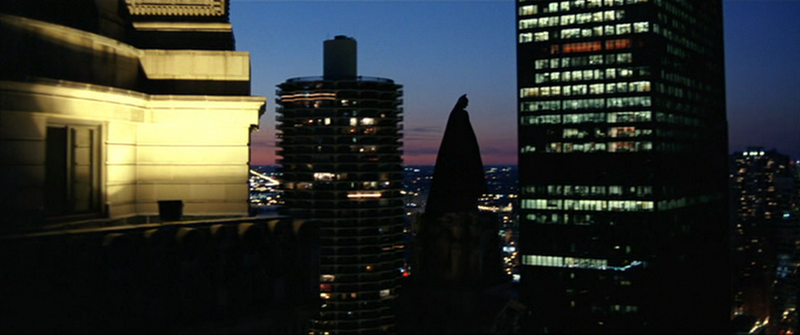
 Fear gets mentioned quite a few times in Batman Begins. In fact, it gets mentioned about a hundred times. 'I seek the means to fight injustice. To turn fear on those who prey on the fearful.' 'Now you must journey inwards, to what you really fear.' 'There is nothing to fear but fear itself.' Etc. Etc. And then the whole of Gotham gets The Fear and tries to rip itself apart. It's almost as if the filmmakers are trying to say something. Is it a comment on paranoia in the Bush era? Or is it an insight into how ordinary people are running scared from real and imagined criminality? Or then again, is it just a bunch of cool stuff in a big Hollywood blockbuster? It's probably a combination of all three, although, as you'd expect, the cool stuff takes precedence.
And it’s certainly cool to see Batman back on the big screen after he was gang raped into a coma by Joel Schumacher and everyone else who was involved in the last two pieces of shit. You can’t keep a good money-spinning cash cow down for long.
But you have to wait a while for Batman to make an appearance – unlike Burton’s film where his presence is immediate. Therefore you have to endure the dreaded back story, which is quite often the death of many a comic book film. I mean, the origin story is often like the first couple of hundred pages of a biography. Yeah, I don’t give a shit that Barry Big Bollocks was born into poverty and that he had to take coal sandwiches to school. I want to read the bit where he makes it big and fucks some slut with a mud shark. And so with a comic book character you often just want to see them in action.
But the build-up in Batman Begins is well handled, even though the ninja training is a tad dull. Yeah I know we have to see how Bruce Wayne gets his skills, but still, it’s rather ho-hum. Neeson’s mentor comes across as a bland, slightly malevolent Apollo Creed or a less interesting variation of the old git out of The Karate Kid. Thrilling cinema it isn’t.
However, other stuff in the build-up is superb, especially the scenes dealing with Bruce’s childhood. They have real heart and feeling, which reminds you that this isn’t some bland product churned out by some easily intimidated hack, but a film made by someone who genuinely cares about the characters.
At the same time, though, you have to marvel at how gosh darn great Bruce’s dad is. Like a superhero he saves Bruce when he falls down a hole. Then he carries Bruce to his bedroom and takes care of him. Then he provides Gotham City with a cheap public transport system. What a wonderful guy. No wonder, then, that his death would fuck Bruce up to such an extent that he dresses up like a giant bat.
The appearance of Batman himself is wonderful. Some hoods are conducting a drug deal down at the docks and then suddenly they begin getting picked off one by one. It’s like something out of a horror film. And then our first full glimpse of the Bat Man sees him dangling upside down behind a criminal. It’s a joy to finally see Batman trying to scare thugs rather than give them hard-ons by flashing bat butts and bat nipples.
And Bale has the perfect voice to intimidate people with. His Batman growls and screams. There’s no messing around. In particular I like the scene where he drags a bent cop up by his ankles and then interrogates him. One second you’re having a nice snack and the next you’re upside down being screamed at by a giant bat. I think anyone would be well within their rights to shit themselves.
And it’s also pleasing that the film is quite scary for a mainstream blockbuster. A large part of the story revolves around a hallucinogenic drug that makes people freak out. Cue then lots of cool visuals of people seeing scary stuff. My favourite is probably the satanic Batman that people see flying over the city. But the demon Batman that Dr Crane/Scarecrow (Cillian Murphy) sees is really cool as well. Oh, and I also like the Scarecrow’s horse – it has glowing red eyes and breathes fire.
As far as the villains go, Dr Crane is easily the best. Excellently played by Cillian Murphy, he has a cold, slimy, sleazy vibe to him. He might not be physically threatening, but his eyes are as cold as ice. Therefore it’s a huge disappointment that he plays second fiddle to Liam Neeson’s colourless Ra’s Al Ghul. Honestly, when he returns, you kind of sigh. You just want to give him a drink to loosen him up. Maybe if he had a laugh he wouldn’t feel so compelled to destroy society and be such a pompous downer. At least you felt Crane enjoyed being evil. He even makes a Roger Moore-style quip when he sets Batman on fire: ‘You need to lighten up.’ Excellent.
And the whole League of Shadows thing is silly as hell. Apparently they’re a group of vigilantes that keep the world in check by destroying societies when they become too corrupt. According to them, they sacked Rome and burnt London to the ground. What the hell is this, The Da Vinci Code? Are they the Priory of Sion or something? For a film that tries to drag Batman back into a sense of reality, this stands out as pure silliness.
Something else that doesn’t really work is the casting of Katie Holmes. She doesn’t embarrass herself and she’s not annoying in a Vicki Vale type of way (although at least Kim Basigner and her acres of hair gave me confusing trouser rumblings as an innocent youth), but she’s ridiculously out of place as a DA. She has no authority. She has no screen presence. She’s amorphous.
Thank fuck then that the rest of the cast, Liam Neeson aside, is superb. Michael Caine is excellent as Alfred, Morgan Freeman does a good job as Q (er, I mean, Lucius Fox), Tom Wilkinson shines in the short amount of time he has and Gary Oldman does a decent job with the thankless role of Gordon – although for some reason the way he says ‘Kevlar’ at the end makes me laugh; just listen to the way he says it. And of course Christian Bale is excellent as Batman. He might not look as deranged as Michael Keaton, but he's far more convincing.
But Bale actually isn’t the best thing in the film. The best thing is the Tumbler. The car chase here is magnificent. The Batmobile flies over roofs, crashes through walls and blows shit up, yet it feels completely authentic. Quite a feat if you ask me. And it’s certainly one of the best action scenes in recent years. And it makes up for the rather bland fight scenes that pepper the film. They try and ape the ones in the Bourne movies but they’re even more blurry and hard to watch.
But even though I have reservations about certain things, the film isa massive success. The serious treatment of the characters has to be applauded and the film itself is engrossing and exciting. Here’s hoping the next one is even better.
Fear gets mentioned quite a few times in Batman Begins. In fact, it gets mentioned about a hundred times. 'I seek the means to fight injustice. To turn fear on those who prey on the fearful.' 'Now you must journey inwards, to what you really fear.' 'There is nothing to fear but fear itself.' Etc. Etc. And then the whole of Gotham gets The Fear and tries to rip itself apart. It's almost as if the filmmakers are trying to say something. Is it a comment on paranoia in the Bush era? Or is it an insight into how ordinary people are running scared from real and imagined criminality? Or then again, is it just a bunch of cool stuff in a big Hollywood blockbuster? It's probably a combination of all three, although, as you'd expect, the cool stuff takes precedence.
And it’s certainly cool to see Batman back on the big screen after he was gang raped into a coma by Joel Schumacher and everyone else who was involved in the last two pieces of shit. You can’t keep a good money-spinning cash cow down for long.
But you have to wait a while for Batman to make an appearance – unlike Burton’s film where his presence is immediate. Therefore you have to endure the dreaded back story, which is quite often the death of many a comic book film. I mean, the origin story is often like the first couple of hundred pages of a biography. Yeah, I don’t give a shit that Barry Big Bollocks was born into poverty and that he had to take coal sandwiches to school. I want to read the bit where he makes it big and fucks some slut with a mud shark. And so with a comic book character you often just want to see them in action.
But the build-up in Batman Begins is well handled, even though the ninja training is a tad dull. Yeah I know we have to see how Bruce Wayne gets his skills, but still, it’s rather ho-hum. Neeson’s mentor comes across as a bland, slightly malevolent Apollo Creed or a less interesting variation of the old git out of The Karate Kid. Thrilling cinema it isn’t.
However, other stuff in the build-up is superb, especially the scenes dealing with Bruce’s childhood. They have real heart and feeling, which reminds you that this isn’t some bland product churned out by some easily intimidated hack, but a film made by someone who genuinely cares about the characters.
At the same time, though, you have to marvel at how gosh darn great Bruce’s dad is. Like a superhero he saves Bruce when he falls down a hole. Then he carries Bruce to his bedroom and takes care of him. Then he provides Gotham City with a cheap public transport system. What a wonderful guy. No wonder, then, that his death would fuck Bruce up to such an extent that he dresses up like a giant bat.
The appearance of Batman himself is wonderful. Some hoods are conducting a drug deal down at the docks and then suddenly they begin getting picked off one by one. It’s like something out of a horror film. And then our first full glimpse of the Bat Man sees him dangling upside down behind a criminal. It’s a joy to finally see Batman trying to scare thugs rather than give them hard-ons by flashing bat butts and bat nipples.
And Bale has the perfect voice to intimidate people with. His Batman growls and screams. There’s no messing around. In particular I like the scene where he drags a bent cop up by his ankles and then interrogates him. One second you’re having a nice snack and the next you’re upside down being screamed at by a giant bat. I think anyone would be well within their rights to shit themselves.
And it’s also pleasing that the film is quite scary for a mainstream blockbuster. A large part of the story revolves around a hallucinogenic drug that makes people freak out. Cue then lots of cool visuals of people seeing scary stuff. My favourite is probably the satanic Batman that people see flying over the city. But the demon Batman that Dr Crane/Scarecrow (Cillian Murphy) sees is really cool as well. Oh, and I also like the Scarecrow’s horse – it has glowing red eyes and breathes fire.
As far as the villains go, Dr Crane is easily the best. Excellently played by Cillian Murphy, he has a cold, slimy, sleazy vibe to him. He might not be physically threatening, but his eyes are as cold as ice. Therefore it’s a huge disappointment that he plays second fiddle to Liam Neeson’s colourless Ra’s Al Ghul. Honestly, when he returns, you kind of sigh. You just want to give him a drink to loosen him up. Maybe if he had a laugh he wouldn’t feel so compelled to destroy society and be such a pompous downer. At least you felt Crane enjoyed being evil. He even makes a Roger Moore-style quip when he sets Batman on fire: ‘You need to lighten up.’ Excellent.
And the whole League of Shadows thing is silly as hell. Apparently they’re a group of vigilantes that keep the world in check by destroying societies when they become too corrupt. According to them, they sacked Rome and burnt London to the ground. What the hell is this, The Da Vinci Code? Are they the Priory of Sion or something? For a film that tries to drag Batman back into a sense of reality, this stands out as pure silliness.
Something else that doesn’t really work is the casting of Katie Holmes. She doesn’t embarrass herself and she’s not annoying in a Vicki Vale type of way (although at least Kim Basigner and her acres of hair gave me confusing trouser rumblings as an innocent youth), but she’s ridiculously out of place as a DA. She has no authority. She has no screen presence. She’s amorphous.
Thank fuck then that the rest of the cast, Liam Neeson aside, is superb. Michael Caine is excellent as Alfred, Morgan Freeman does a good job as Q (er, I mean, Lucius Fox), Tom Wilkinson shines in the short amount of time he has and Gary Oldman does a decent job with the thankless role of Gordon – although for some reason the way he says ‘Kevlar’ at the end makes me laugh; just listen to the way he says it. And of course Christian Bale is excellent as Batman. He might not look as deranged as Michael Keaton, but he's far more convincing.
But Bale actually isn’t the best thing in the film. The best thing is the Tumbler. The car chase here is magnificent. The Batmobile flies over roofs, crashes through walls and blows shit up, yet it feels completely authentic. Quite a feat if you ask me. And it’s certainly one of the best action scenes in recent years. And it makes up for the rather bland fight scenes that pepper the film. They try and ape the ones in the Bourne movies but they’re even more blurry and hard to watch.
But even though I have reservations about certain things, the film isa massive success. The serious treatment of the characters has to be applauded and the film itself is engrossing and exciting. Here’s hoping the next one is even better.
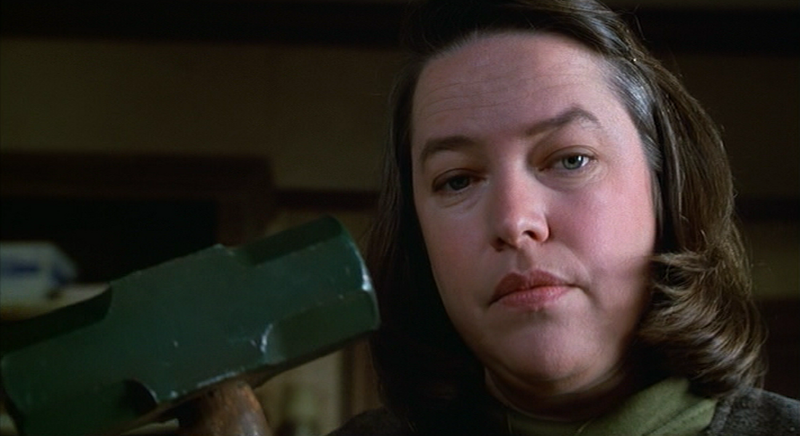
There are three types of people who frighten me: people who have an intense love of popular romantic fiction; people who can't bring themselves to swear under any circumstances whatsoever and instead invent their own homespun swear-lite; and people whose heinous actions are supposedly ordained by god. All of these afflictions hint at an arrested development, an inability to deal with reality and a barely suppressed rage. So, needless to say, in light of her suffering from all three of these disorders, Annie Wilkes is a woman to be extremely fearful of.
But of course, at first, she seems so nice. She rescues Paul Sheldon from freezing to death after he crashes his car in a blizzard and then she gives him medical treatment in her own home. But no sooner has she opened her mouth than she's declaring him 'The World's Greatest Writer' and calling him a 'literary genius' - this she says of a man who loathes his own work and a man who hates the way he's become a manufacturer of bland product rather than a writer expressing himself. But even more worryingly she apologises for making him feel "oogy". The warning bells ring loud and clear.
But Annie's insanity doesn't get its first overt display until after she's begun reading the manuscript that was pulled from Paul's car – it's more personal work and it's a breakaway from the Misery tripe he's been getting rich off. She admits that it's well written but she says the profanity bothers her. And she flies off the handle completely when Paul insists that slum children do indeed swear. It's a great scene and Kathy Bates' delivery is perfect. It's both comical and unnerving.
However, more frightening than the loss of temper is the way that Annie apologises. She tells Paul she loves him. Paul's sphincter must be playing all kinds of tricks.
After this, the film plays the humour of the situation for a little while. We get a funny scene where Annie introduces Paul to her pig (which, surprise, surprise, is called Misery) and then there's a fantastic bit where Annie is talking about her failed marriage. At first it appears to be a serious scene, but then halfway through her spiel we find out that Paul has been urinating into a bottle while listening to her prattle on. And it becomes even funnier when Annie begins lecturing Paul while swishing the bottle of urine absently in her hand. The weird humour helps make Annie seem more believable (and therefore more terrifying).
Another funny moment is when Annie is talking about 'Misery's Child' (unbeknownst to Annie, it's Misery's final book – Paul's killed her off). She's about halfway through and she calls it divine. And then she asks this wonderful question: "What's the ceiling that dago painted?" "The Sistine Chapel," is Paul's incredulous response. "Yeah, that and ‘Misery's Child’, those are the only two divine things ever in this world." It's a funny moment because it reveals so much about Annie's character – she's totally ignorant and she's casually racist, too (so much for being clean and pure).
But the humour in the film comes to a bit of a halt when Annie finishes 'Misery's Child' and finds out about Misery's death. She terrorises Paul as he sleeps and then in the morning she makes him burn the manuscript of the new non-Misery book he's written. In a typical fundamentalist Christian sort of way she insists he must rid the world of this 'filth'. And in one of the most casually frightening bits in the film she walks around the bed absently squirting lighter fluid on his legs. It's only after this that Paul is persuaded to burn his book. And the look on Caan's face is wonderful. He's both completely heartbroken (he might as well have burnt one of his own children) and filled with rage – after this he quietly declares war on Annie.
But after the burning, the humour returns. However, it becomes more closely linked with the horror. For instance, there's a darkly amusing moment when Annie loses her temper when Paul shows that the expensive paper she's bought for him smudges. She begins shouting and then slams the paper into his lap. And then there's the rant she makes about chapter plays ("He didn't get out of the cockadoode car!"). I mean, it's nutty enough that a woman has her favourite writer held hostage in her house and she's making him write a new Misery book for her, but it's blackly comic that she becomes a violent one-person focus group. It must be every writer's worst nightmare – you've got to tailor your work to the whims of a nutball.
A fabulous scene illustrating how precarious Paul's situation is is when Annie begins talking to him in a depressed state. She goes on about how the rain gives her the blues and she says how fearful she is of losing him. And then she pulls a gun out. Again both Caan and Bates are tremendous. Caan barely suppresses his alarm and Bates casually says that she might put bullets in the weapon. Once again it's a small off-hand moment that is horrific in the implied threat.
And the famous hobbling scene is made more unsettling by the way Annie tells Paul she loves him after she's broken his ankles. Nothing says "I love you" like smashed feet, eh?
But although Bates rightly gets a lot of attention, I really must give Caan a lot of credit for his performance. He conveys the helplessness of his situation superbly and it's such a cathartic moment when he finally stuffs the charred remains of 'Misery's Return' down Annie's throat. But if I'm nitpicking I do have to say it's a shame that the fight at the end has the clichéd 'back from the dead' moment. It's the only wrong step in an otherwise fantastic film.
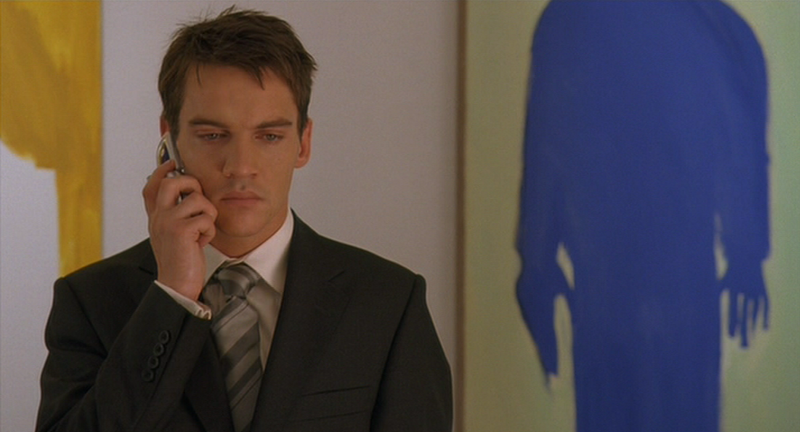
When it came out, Match Point was touted as a return to form for Woody Allen. It was meant to be one of his best films. Instead it’s something of a disappointment, mostly because the two main stars perform so badly. Time after time amateurish acting spoils a possibly good scene. Jonathan Rhys Meyers and Scarlett Johansson are completely out of their depth.
The worst scenes occur towards the end when the fiendish Meyers concocts a plan to kill his lover. They spend ages talking and arguing, and over and over again Scarlett, who’s pregnant, tries to get Myers to leave his wife. But all Scarlett does is walk around, drinking and popping pills as she shrilly berates her beau, and Myers just tugs his hair and shouts. It’s like a school play – the quality of acting is that poor.
But you have to wonder what Meyers sees in the woman. Yes she’s physically attractive, but her character is spoiled, selfish and whiny. Therefore I celebrated her murder at the hands of Meyers like he’d won Wimbledon. She really did deserve to be put out of her misery, screeching like a harridan at every moment and falling for Meyers’ lies.
I was just annoyed that Meyers didn’t kill his wife as well, as she was just as bad, if not worse, than Scarlett. Played by Emily Mortimer she’s a silly little rich girl who gets besotted by the handsome ex-tennis pro and is then arranging his life for him within a few minutes. She introduces him to her rich father, gets him a good job and tells him she wants a child. Meyers’ life is being taken away from him. It’s no longer his own. His wife is calling the shots.
But although at first Mortimer seems nice, she turns out to be just as manipulative as Scarlett and Meyers. There’s one scene where she’s talking with her friends about the holiday they’re all going on, and then she mentions that she once gave Meyers an ancient Greek fertility charm and put it under his pillow for two months but that she still isn’t pregnant. It’s a subtle humiliation, one with a smile. And earlier Mortimer makes fun of Meyers when he orders modestly at a restaurant and then jokingly refers to his poor upbringing. She’s not meant to be taking the piss, but she is. And then even earlier she condescendingly says that her father is proud of the way he dragged himself up against the odds, meaning that they’re indirectly calling him gutter-trash. Therefore you can’t blame Meyers for seeking solace in someone else’s arms.
But unfortunately Meyers’ misery is everlasting. He kills Scarlett and gets away with the crime, but as if this emotional torment isn’t enough, he finally has a child with his wife and there’s talk of having another. He’s buried himself even deeper in his own private hell. An escape is even less likely, tied as he is to the money and comfort of his torpid lifestyle.
And of course its ironic that this good luck of getting away with the crime means that Meyers has plunged himself even deeper into his misery. Consequently you know that the opening and ending adage that its better to be lucky than good is complete baloney. Being lucky has done nothing for this person. It’s just made his existence even more painful and depressing.
With all these themes running through the film and with all this meat to chew on, you’d think the film would be a pleasurable experience. But like I mentioned at the beginning, the poor acting spoils things. Apart from Meyers and Johansson, who are consistently disappointing, there are also the two cops at the end. They never convince. Although some of the blame should also be apportioned to the writing. The dialogue between the detectives is consistently hokey and there’s even a moment where one of them sits up in his bed and proclaims to himself that he knows who did it. The corniness of it is overwhelming. I can’t believe anyone in real life does that.
Allen is much better at writing the idle banter of the rich. The characters here have nothing to contribute to the world. They’re all selfish. They’re all scum. And in a lot of scenes there’s an upper class desperation that rings true. But because the acting from the two leads is so bad it’s hard to get swept away by the film. I certainly don’t need to like characters in order to enjoy a movie, but they need to be able to convince me that they exist in some alternate reality. Here, though, I was consistently pulled out of the film.
An example of this is during the murder sequence. Meyers is skulking away in a stairwell and he hears a couple approaching. Fearing exposure, he hides in a corner. But watch his face. He suddenly pulls an incredibly camp expression. In that moment he looks like Kenneth Williams.
And then you have the first encounter between Scarlett and Meyers. Scarlett’s attempt at being sexy is to just pout and stare. There’s little else going on behind the eyes. She fails to inhabit the skin of a character. Instead she just seems to be going through the motions.
But even though Allen is crippled by his actors, he still manages to make the film reasonably enjoyable. It’s nowhere near his best but it’s certainly not among his worst. And there’s also the novelty value of Allen filming in London. He has a bit of a tourist’s eye and the characters live lifestyles that often seem beyond them – even if you do have loads of money, how much would it cost to have an apartment overlooking Parliament? – but it’s good to see Allen try and stretch himself. He doesn’t quite succeed, but with Meyers and Johansson cast in the central roles, I guess luck wasn’t quite with him.
The worst scenes occur towards the end when the fiendish Meyers concocts a plan to kill his lover. They spend ages talking and arguing, and over and over again Scarlett, who’s pregnant, tries to get Myers to leave his wife. But all Scarlett does is walk around, drinking and popping pills as she shrilly berates her beau, and Myers just tugs his hair and shouts. It’s like a school play – the quality of acting is that poor.
But you have to wonder what Meyers sees in the woman. Yes she’s physically attractive, but her character is spoiled, selfish and whiny. Therefore I celebrated her murder at the hands of Meyers like he’d won Wimbledon. She really did deserve to be put out of her misery, screeching like a harridan at every moment and falling for Meyers’ lies.
I was just annoyed that Meyers didn’t kill his wife as well, as she was just as bad, if not worse, than Scarlett. Played by Emily Mortimer she’s a silly little rich girl who gets besotted by the handsome ex-tennis pro and is then arranging his life for him within a few minutes. She introduces him to her rich father, gets him a good job and tells him she wants a child. Meyers’ life is being taken away from him. It’s no longer his own. His wife is calling the shots.
But although at first Mortimer seems nice, she turns out to be just as manipulative as Scarlett and Meyers. There’s one scene where she’s talking with her friends about the holiday they’re all going on, and then she mentions that she once gave Meyers an ancient Greek fertility charm and put it under his pillow for two months but that she still isn’t pregnant. It’s a subtle humiliation, one with a smile. And earlier Mortimer makes fun of Meyers when he orders modestly at a restaurant and then jokingly refers to his poor upbringing. She’s not meant to be taking the piss, but she is. And then even earlier she condescendingly says that her father is proud of the way he dragged himself up against the odds, meaning that they’re indirectly calling him gutter-trash. Therefore you can’t blame Meyers for seeking solace in someone else’s arms.
But unfortunately Meyers’ misery is everlasting. He kills Scarlett and gets away with the crime, but as if this emotional torment isn’t enough, he finally has a child with his wife and there’s talk of having another. He’s buried himself even deeper in his own private hell. An escape is even less likely, tied as he is to the money and comfort of his torpid lifestyle.
And of course its ironic that this good luck of getting away with the crime means that Meyers has plunged himself even deeper into his misery. Consequently you know that the opening and ending adage that its better to be lucky than good is complete baloney. Being lucky has done nothing for this person. It’s just made his existence even more painful and depressing.
With all these themes running through the film and with all this meat to chew on, you’d think the film would be a pleasurable experience. But like I mentioned at the beginning, the poor acting spoils things. Apart from Meyers and Johansson, who are consistently disappointing, there are also the two cops at the end. They never convince. Although some of the blame should also be apportioned to the writing. The dialogue between the detectives is consistently hokey and there’s even a moment where one of them sits up in his bed and proclaims to himself that he knows who did it. The corniness of it is overwhelming. I can’t believe anyone in real life does that.
Allen is much better at writing the idle banter of the rich. The characters here have nothing to contribute to the world. They’re all selfish. They’re all scum. And in a lot of scenes there’s an upper class desperation that rings true. But because the acting from the two leads is so bad it’s hard to get swept away by the film. I certainly don’t need to like characters in order to enjoy a movie, but they need to be able to convince me that they exist in some alternate reality. Here, though, I was consistently pulled out of the film.
An example of this is during the murder sequence. Meyers is skulking away in a stairwell and he hears a couple approaching. Fearing exposure, he hides in a corner. But watch his face. He suddenly pulls an incredibly camp expression. In that moment he looks like Kenneth Williams.
And then you have the first encounter between Scarlett and Meyers. Scarlett’s attempt at being sexy is to just pout and stare. There’s little else going on behind the eyes. She fails to inhabit the skin of a character. Instead she just seems to be going through the motions.
But even though Allen is crippled by his actors, he still manages to make the film reasonably enjoyable. It’s nowhere near his best but it’s certainly not among his worst. And there’s also the novelty value of Allen filming in London. He has a bit of a tourist’s eye and the characters live lifestyles that often seem beyond them – even if you do have loads of money, how much would it cost to have an apartment overlooking Parliament? – but it’s good to see Allen try and stretch himself. He doesn’t quite succeed, but with Meyers and Johansson cast in the central roles, I guess luck wasn’t quite with him.
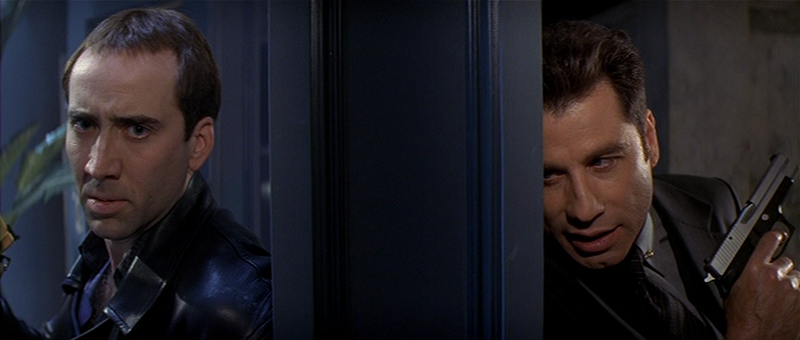
What happens when you take two of the world’s most over the top actors and put them in a film that forces them to over act even more than normal? Pure cinematic gold. That’s what happens.
The film begins with John Travolta as Sean Archer and Nicolas Cage as Castor Troy. Archer is a tightwad government agent whose idea of a good time is breaking balls, crying and grieving over his dead son.
The opening scene sees Archer with his young son Michael on a merry-go-round. Twinkly music plays and father and son laugh, and you immediately know something bad is going to happen, because they’re enjoying themselves far too much. Then
One should never expect subtlety from a film that’s called Face/Off, but the complete lack of restraint in the opening scenes pleases me a great deal. We see Castor Troy plant a bomb in an exhibition centre while dressed as a priest. And then when his work is done he comes across a choir singing Handel. With a big crucifix around his neck, Cage then proceeds to clap his hands and headbang. And then he sees a girl he likes. He talks to her for a bit and then grabs her arse. He then makes a face like he’s splattered his robe – he’s experienced an earth-shattering orgasm.
But then a bit later Castor Troy takes a flight on a private jet. Cage, for some inexplicable reason, starts talking in a fake British accent, saying he’s bored and that he wants the flight to take off. And then he spots what he thinks is a flight attendant (it’s really an undercover FBI agent). He gets the woman to sit on his lap and then asks her to suck his tongue, which she enthusiastically does. He’s kind of like a rock and roll star. However, there is one disturbing thing about this tongue sucking.
The action scene that follows sees Archer try and prevent
Therefore, with Cage getting to do so much fun stuff, you initially feel a bit sorry for Travolta. He has to play a humourless knob. I mean, there’s one scene, after they catch
But then we have the face switch. Of course the reasoning for the whole thing is complete bollocks. Basically, with
Well, yes they can, because now Castor Troy is living Sean Archer’s life. That includes living in his house, bringing up his daughter and fucking his wife. And the film has great fun with this. We see the Travoltered Troy woo Archer’s wife and treat her to a candlelit dinner. We also see him ogle her arse. She’s going to have more fun with him than she ever did with her real husband.
And there’s a great scene where the Travoltered Troy visits the Caged Archer in prison. Of course, Archer is rather surprised. And then
And after the beginning of the film it’s fun to see Travolta unleashed. He can eat up the scenery just as well as Cage. And there’s lots of comedy to be had in the fact that briefly this super-criminal becomes the ideal husband and father. He fucks his wife, which Archer hadn’t been doing, and then when Archer’s daughter begins to get harassed by a date, he kicks his foot through a Corvette window and beats the guy up. And then later he gives his daughter a knife for protection. Very briefly they’re a happy family.
But one thing puzzles me about the face/off operation. We hear that as well as changing faces, the operation will take care of love handles and a microchip in the throat will alter the voice. But what about cock? Did that get changed? And if not, wouldn’t Archer’s wife have noticed that her husband suddenly turned either into a donkey or a hamster? But I guess they could have the same size dong. But at the same time, I’m willing to bet that
But although the film is funny and incredibly violent, it’s also rather sappy. Archer, now with Cage’s face, has to seek refuge with
But if there was a competition between the two for who best adapts to their new environment,
But the good times can’t last for ever and eventually Archer’s wife finds out that she’s been getting porked by her son’s murderer. Cue doves, slow-motion and lots of guns.
The final action scene is a reminder of how much more fun action scenes are when stunts are used instead of CGI. We see speedboats race through piers and we see men hanging off boats, and even though sometimes the stunt doubles are far too obvious, it allows you to enjoy the scene much more than you would if it were just computer pixels.
But even for a silly film, the ending is ridiculous. Somehow, even though all the evidence for the operation is lost and all the medical staff are dead, Archer’s real face is restored to him. Phew. That was incredibly convenient.
And then on top of this, you have the scene where Archer returns home. It’s filmed through a dreamy haze, and then after he’s hugged his family and his daughter apologises for shooting him (the poor girl gets awful confused when she sees her dad with someone else’s face), he brings Troy’s son in with him – a readymade replacement for his dead son. It’s incredibly sappy, but like the rest of the film, I fall for it.
But still, I can’t help but contemplate all the psychiatry that these characters will need. First of all, you have a woman sleeping with her son’s murderer. Then you have a daughter shooting her dad. Then you have a daughter getting a gun pointed at her and getting licked by a man who looks like her dad. Then you have a man killing a man who has his face. You’d be so fucked up after that. But then again, apparently a cute moptop who’s the spawn of your son’s murderer will make everything a-ok.
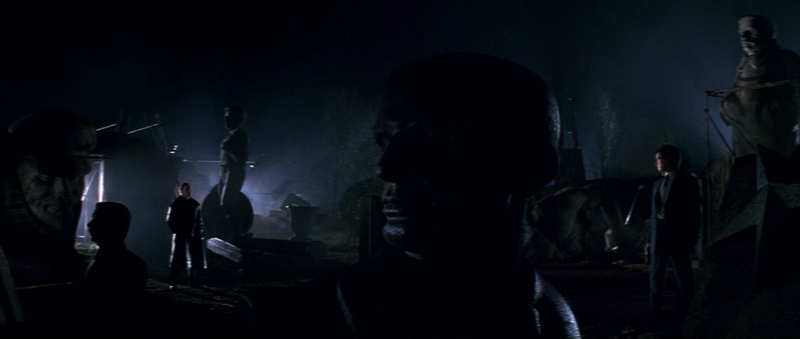
GoldenEye marks the highpoint in Brosnan’s tenure as Bond. None of the subsequent films were as fun, as well written or as memorable. In fact, they were all disappointingly bland. Until Daniel Craig came along, the franchise regressed rather than moved forward.
But GoldenEye was a welcome return to form in 1995 (although I like the previous film Licence to Kill quite a bit) and it still stands up. The action scenes are superb, the dialogue is pithy and it has quite a few memorable characters, which makes the film stand out even more considering how forgettable most of the characters have been in subsequent films. I mean, who can forget that blonde bloke from Tomorrow Never Dies? Or the nuclear physicist with the large rack in The World is Not Enough? Or the bald geezer out of Die Another Day? They were characters for the ages...
But like I say, GoldenEye is stocked with great characters. Just take Xenia Onatopp. How can you not like a woman who crushes men to death between her thighs? Plus she also has a penchant for fascistic leather military uniforms and a desire to shoot people while moaning like a whore. I dig that. Then there's Alec Trevelyan – a plumy, lecherous, traitorous former MI6 agent who says things like, "You know, James...I was always better." I dig that too. And there's Zukovsky, computer geek Boris and General Ourumov. Out of these, Ourumov has to be my favourite, largely because he has a hip flask and a huge nose. Always a good combination. (I also have to mention that I love how camp his stance is when he 'executes' 006. All I'll say is, ‘I'm a little teapot.’) And Jack Wade is good too. Sure he's a concession to American audiences, but he represents them well – he's an overweight loudmouth.
Even the token totty stand up well. Izabella Scorupco is a fine looking woman, but, get this, she can actually act. And the fact that she can act makes it easy to overlook the fact that she's far too attractive to be a computer programmer. The same can't be said of Denise Richards in The World is Not Enough.
And Judi Dench is a great M and Samantha Bond is a fantastic Moneypenny. Although I have to say that I'm always distracted by Samantha Bond's nose. It’s got a life of its own. Take a look when you watch it next; it bobs up and down like crazy. (I've seen this film too many times…)
The only negative is that Desmond Llewelyn seems to be reading his dialogue from cue cards. He seems to be looking beyond Bond in their scene. I guess he must have had trouble remembering the jargon-heavy lines. But I still find it rather distracting. (Again, I've seen this film far too many times…)
But I guess what most people judge Bond films by, is the action. Well, in that regard, it's more than adequate. The opening stunt has to be the highlight. Stunts are so much more impressive when you're allowed to believe your eyes, when they're actually done for real. And the dam jump is possibly the best stunt I've seen.
After that you have the plane sequence. This bit is silly as hell. Bond rides off a cliff, catches up to a free-falling plane – despite it falling under both the force of gravity and its engines – and pulls it out of its descent. It's ridiculous, but hey, that's Bond. Since when have the laws of physics and plausibility bound this immortal? Better, though, is the tank sequence. It's a novel spin on the obligatory car chase and it's well done – although whoever was responsible for the Perrier product placement should hang their head in shame. But my favourite piece of action, aside from the dam jump, is the fight between Bond and Trevelyan. It's just a good no-frills, no-holds-barred piece of fighting between the two main characters – usually, at the end of a Bond film, Bond has to stop some bomb or some device, or kill loads of faceless henchman or some effete villain. Therefore it's nice just to have a straight up fight end a Bond film. Sure you have a bit of extraneous detail to tie up the plot, but, as ever, it doesn't matter. It's just background noise. But although I like the fight, there's still more silliness. After falling a few hundred feet to a concrete floor, Trevelyan is not only still alive but only has a slightly bloody nose. I'm sure it was a concession to the censors, but it's quite amazing how indestructible movie folk are.
But watching the film back I was quite impressed at how intelligent the film is, certainly compared to subsequent Bond films. There's some good stuff about the end of the Cold War and
But the film also has an excellent sense of humour. There are some real corkers: "How do you take it?" "Straight up…with a twist", "I like a woman who enjoys pulling rank" and "She always did enjoy a good squeeze."
Add all of this to a fantastic score (which I'm unusual among Bond fans in liking), some excellent miniature work (always better than bad CGI...I'm pointing at you Die Another Day) and a superb Bond in Pierce Brosnan, and you have one of the best films in the series.
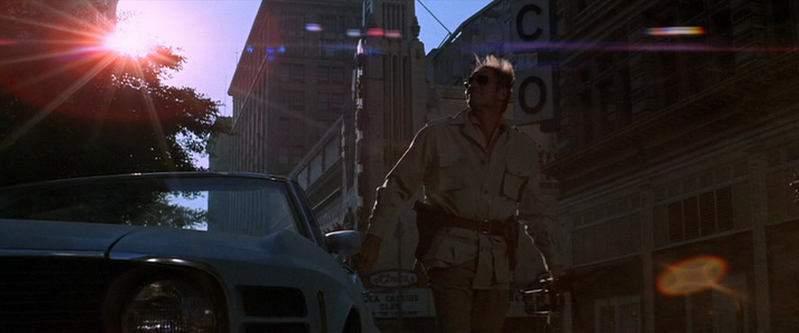
I Am Legend suffered because the vampires from the novel were turned into badly rendered CGI zombie-type things. The Omega Man, on the other hand, suffers because the vampires are turned into albino Luddites. Yeah, that’s right. Albino Luddites.
Maybe the image of white-faced, sunglass wearing monks sounds scary on paper, but on film it’s somewhat humorous. Oh no, please spare me from the pasty-faced hoodies. Oh how they terrify me. But it also doesn’t help that these so-called psychopaths (Heston’s words) act like the Keystone Cops.
The Family, as they’re called, first appear after Robert Neville (Heston) struggles to get home before nightfall. There he is parking his car when a hooded individual throws a lighted torch at him and drops down into his car. But no sooner do these clowns manage to mount a dirty sneak attack than they’re being riddled with machine gun fire. They’re incompetent.
The best example of The Family’s incompetence is during the sequence when they try to burn Neville at Dodger Stadium. Somehow he gets free and escapes via motorbike. Cue The Family trying to stop him and then being blinded by flares and smoke bombs. It burns! It burns!
But the scene where Heston is going to be burnt at the stake is a good example of the heavy-handed Christian imagery that permeates the film. You see, germ warfare wipes out mankind during a conflict between China and Russia. All that’s left are Heston (the last man on Earth), the albino Luddites who are infected and dying, and infected humans who appear normal but will eventually become albino Luddites. So therefore The Family takes it upon itself to burn Neville for mankind’s sins. He’ll sacrifice himself for a purer world, one free of the evils of technology. But would you believe it, even though he’s tied to a cross like Jesus, he gets free.
Then there’s the film’s final image. At the end, the head of The Family spears Neville and he slowly dies in a fountain, soaking in his own blood. And he dies while in the crucifixion pose. Neville is the world’s saviour. With the vaccination he makes, he promises to resurrect mankind, thus making him a divine figure.
In one scene an infected but still normally functioning girl even asks Neville whether he’s god. He laughs it off. But to all intents and purposes, he is. He’s the one who has the power over life and death. He chooses who lives and who doesn’t. He’s both saviour and destroyer, much like the Christian god of the Old Testament.
But although it’s nice that all of this stuff is included in the film, it doesn’t rescue it from mediocrity. Sure it has some good ideas, but a lot of the film is uninspired or just poorly made.
The opening sequence, for instance, which sees Neville driving around a deserted city is rendered laughable by the ridiculously cheery music. Here we have the end of the world and it’s...jazzy. There’s no threat. There’s no feeling of despair or doom. It just indicates that this is going to be a jaunty, run of the mill 70s B-movie adventure. The score dates the film horribly.
I also find it weird that Chuck Heston would choose to watch Woodstock over and over again – to keep himself entertained, Neville goes to a cinema and watches the same movie repeatedly. I thought Heston would want to shoot all those hippie fucks.
And then in the opening there’s a moment when Neville gets himself a new car. He goes into a dealership, and after removing the calendar that taunts him with the promise of female flesh, we see the rotting skeleton of someone who worked in this place. It should be a jarring moment. It should be scary. But the film merrily goes on about its way, reassuring us that this is just going to be a bit of fluff – there’s nothing to worry about.
The only real moment of terror in the film is the existential terror Neville feels when he suddenly hears every payphone ringing as he wanders the lonely streets. This is the sort of thing I wish the film would focus on – Neville is losing his mind and he’s hearing things that aren’t there. But although there are a few nice little details in the film, like Neville having conversations with inanimate objects, the feeling of desperation and isolation is immediately lost when The Family turn up so quickly. Plus they’re far too human. Yeah they’re a bit mad, talking like religious zealots, but you see worse on the Tube. You feel that if only you could stop them from burning you, and if only you could steer the discussion away from theology and morality, you could have a decent little chat.
Also detracting from the feeling of dread are the infected people who haven’t gone mad yet. They pretty quickly relieve Neville of his loneliness. And the scene where Neville first encounters another normal person is unintentionally amusing. Neville walks around a clothes shop full of mannequins and then begins to hear something. When he turns around a new mannequin has arrived – there’s a black girl with a large afro pretending to be still. I guess if it were done right it could be quite creepy, but instead with the girl not being very good at keeping still it looks like the end of every Police Squad episode.
Another disappointing element is Neville’s relationship with The Family. When he kills three of them he talks of an ‘end game’ and of them losing three pawns. Therefore you get the feeling that the whole thing is a game to Neville – The Family might be trying to kill him, but he needs them in order to remain functional; even though they attack his house every night and even though he has a huge machine gun on the roof, to kill the whole Family would finally render his life pointless and aimless. But although all of this is there, it soon gives way to goofy action scenes and a tedious love story – no sooner have Chuck and the black girl escaped a deadly Luddite attack than they’re rolling on the floor with Heston joking that he might have forgotten how to make love. Interesting plot elements continually and repeatedly make way for the familiar action/adventure beats.
Maybe the image of white-faced, sunglass wearing monks sounds scary on paper, but on film it’s somewhat humorous. Oh no, please spare me from the pasty-faced hoodies. Oh how they terrify me. But it also doesn’t help that these so-called psychopaths (Heston’s words) act like the Keystone Cops.
The Family, as they’re called, first appear after Robert Neville (Heston) struggles to get home before nightfall. There he is parking his car when a hooded individual throws a lighted torch at him and drops down into his car. But no sooner do these clowns manage to mount a dirty sneak attack than they’re being riddled with machine gun fire. They’re incompetent.
The best example of The Family’s incompetence is during the sequence when they try to burn Neville at Dodger Stadium. Somehow he gets free and escapes via motorbike. Cue The Family trying to stop him and then being blinded by flares and smoke bombs. It burns! It burns!
But the scene where Heston is going to be burnt at the stake is a good example of the heavy-handed Christian imagery that permeates the film. You see, germ warfare wipes out mankind during a conflict between China and Russia. All that’s left are Heston (the last man on Earth), the albino Luddites who are infected and dying, and infected humans who appear normal but will eventually become albino Luddites. So therefore The Family takes it upon itself to burn Neville for mankind’s sins. He’ll sacrifice himself for a purer world, one free of the evils of technology. But would you believe it, even though he’s tied to a cross like Jesus, he gets free.
Then there’s the film’s final image. At the end, the head of The Family spears Neville and he slowly dies in a fountain, soaking in his own blood. And he dies while in the crucifixion pose. Neville is the world’s saviour. With the vaccination he makes, he promises to resurrect mankind, thus making him a divine figure.
In one scene an infected but still normally functioning girl even asks Neville whether he’s god. He laughs it off. But to all intents and purposes, he is. He’s the one who has the power over life and death. He chooses who lives and who doesn’t. He’s both saviour and destroyer, much like the Christian god of the Old Testament.
But although it’s nice that all of this stuff is included in the film, it doesn’t rescue it from mediocrity. Sure it has some good ideas, but a lot of the film is uninspired or just poorly made.
The opening sequence, for instance, which sees Neville driving around a deserted city is rendered laughable by the ridiculously cheery music. Here we have the end of the world and it’s...jazzy. There’s no threat. There’s no feeling of despair or doom. It just indicates that this is going to be a jaunty, run of the mill 70s B-movie adventure. The score dates the film horribly.
I also find it weird that Chuck Heston would choose to watch Woodstock over and over again – to keep himself entertained, Neville goes to a cinema and watches the same movie repeatedly. I thought Heston would want to shoot all those hippie fucks.
And then in the opening there’s a moment when Neville gets himself a new car. He goes into a dealership, and after removing the calendar that taunts him with the promise of female flesh, we see the rotting skeleton of someone who worked in this place. It should be a jarring moment. It should be scary. But the film merrily goes on about its way, reassuring us that this is just going to be a bit of fluff – there’s nothing to worry about.
The only real moment of terror in the film is the existential terror Neville feels when he suddenly hears every payphone ringing as he wanders the lonely streets. This is the sort of thing I wish the film would focus on – Neville is losing his mind and he’s hearing things that aren’t there. But although there are a few nice little details in the film, like Neville having conversations with inanimate objects, the feeling of desperation and isolation is immediately lost when The Family turn up so quickly. Plus they’re far too human. Yeah they’re a bit mad, talking like religious zealots, but you see worse on the Tube. You feel that if only you could stop them from burning you, and if only you could steer the discussion away from theology and morality, you could have a decent little chat.
Also detracting from the feeling of dread are the infected people who haven’t gone mad yet. They pretty quickly relieve Neville of his loneliness. And the scene where Neville first encounters another normal person is unintentionally amusing. Neville walks around a clothes shop full of mannequins and then begins to hear something. When he turns around a new mannequin has arrived – there’s a black girl with a large afro pretending to be still. I guess if it were done right it could be quite creepy, but instead with the girl not being very good at keeping still it looks like the end of every Police Squad episode.
Another disappointing element is Neville’s relationship with The Family. When he kills three of them he talks of an ‘end game’ and of them losing three pawns. Therefore you get the feeling that the whole thing is a game to Neville – The Family might be trying to kill him, but he needs them in order to remain functional; even though they attack his house every night and even though he has a huge machine gun on the roof, to kill the whole Family would finally render his life pointless and aimless. But although all of this is there, it soon gives way to goofy action scenes and a tedious love story – no sooner have Chuck and the black girl escaped a deadly Luddite attack than they’re rolling on the floor with Heston joking that he might have forgotten how to make love. Interesting plot elements continually and repeatedly make way for the familiar action/adventure beats.
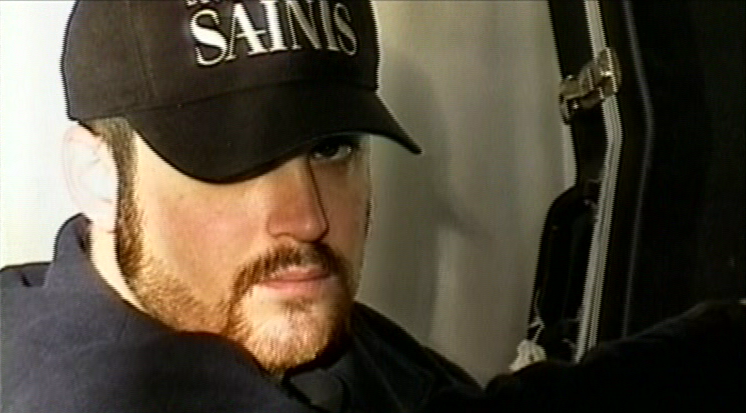
Troy Duffy is a cunt. Just watch Overnight. In it he bullies film executives, record producers, band members and friends. He’s a colossal prick. But even worse than this, he thinks he’s some sort of genius. He thinks he’s a great musician and filmmaker.
Validating Duffy’s delusion is the fact that Miramax buys his script for The Boondock Saints. Thinking he’s the next Tarantino, they give him $300,000 for the script, they hand him the reigns to direct the movie (with a $15m budget), they allow him to produce the soundtrack with his band, he gets to approve casting and is allowed final cut, and the final part of the deal is that Miramax will buy his bar (prior to getting into film, he’s a bartender and bouncer), which he and Harvey Weinstein will co-own. It’s a great deal. It’s an amazing deal. It’s a deal that’s out of this world. Only a moron could fuck it up.
Well, Troy Duffy is that moron. Given this great deal, he proceeds to abuse and alienate everyone around him. So much so that a film that initially starts out as a loving document to his talents ends up being a character assassination.
One of the first things we hear from Duffy’s lips is that friendship is the most important thing in the world to him. Therefore one could assume that, despite the rough edges, he’s an honourable guy. Nothing could be further from the truth. In one ball-shriving scene he refuses to pay his friends who had operated for a long time as the managers of his band. He says they don’t deserve any money. His friends then point out all the time they spent managing the band – all the effort they put into it. Duffy then changes his mind and says that they do deserve the money. But at the same time he says he’s still not going to give it to them. This he says to people who are in financial problems because of him. People who have broken their back for him. And then he has this to say to one of them: ‘I don’t care how you feel. Fuck you!’ What a cunt.
But this actually isn’t the first record deal that The Brood receive (yes, that’s the ridiculous name of Duffy’s band). Earlier on Maverick Records sign them up sight unseen. But just when you’re slapping your head at the stupidity of Madonna’s label, Duffy fucks up and pisses them off. He then rants and raves and says the label is scared. He says they’re scared of how good the The Brood are. What the fuck? If Duffy is right then he’s saying that the label are scared of making shitloads of money? Yeah, makes perfect sense.
But eventually the band get signed to Atlantic Records, which leads to the argument over money with the former band managers (who, incidentally, are the makers of this documentary). The moment when the band is signing their contract and receiving their money in cash is pathetic. They’re like dogs begging for scraps.
But thankfully the album has a happy ending. Despite proclaiming that, ‘This group, I believe, has more potential to put more creativity on the table than probably any other seven men in the history of this fucking town’, Duffy’s band only sells 690 copies…after being in stores for six months!
And yet earlier in the film, when they’re recording, Duffy wonders why his fellow band members haven’t been coming up to him and shaking his hand for securing the deal. He even says that the album isn’t a group effort. He says it’s all down to him – without him, there’s nothing. So surely that means that the album’s failure is his and his alone? Maybe his fellow band members should line up and take turns punching him in the face.
But Duffy’s film fares just as well as his album. It’s dumped in five theatres for one week and makes $25,000. It’s pathetic even for Duffy.
However, I’m sure Duffy would have lots of explanations for this. You see, after getting a great deal with Miramax, he proceeds to piss them off to such an extent with his bitching and moaning and ridiculous demands that they pull out. Therefore the film is financed independently. Of course this doesn’t concern Duffy, who says that when the film is made and Miramax want back in, they can pay their way back in. But when it comes to selling the film, nobody wants a part of it. Most of the time I’d be appalled that a filmmaker could be blacklisted and that the industry would conspire against him, but here it makes me happy. Duffy is man who was given a great chance to prove himself. All he had to do was shut his fucking mouth and get on with things. Instead he acted like an arsehole and tried to throw his weight around. Hell, at one point, before he’s even shot a foot of film or recorded one note of his album, he says that he’s gone straight from a bartender and surpassed everyone – he’s already right at the top. Only an idiot could think that way – don’t you have to have produced something first to be at the top? Therefore the film’s awful distribution deal had me grinning like a loon.
I’m also kind of amused by the way the makers of the documentary try and fuck Duffy over. In one scene we see Duffy bemoan his ability to find a decent girl – he just wants to find a nice girl he can settle down with. We then cut to some sleazy footage of a drunk Duffy getting girls to show him their tits. The film never tries to be objective and is all the more entertaining for it.
Validating Duffy’s delusion is the fact that Miramax buys his script for The Boondock Saints. Thinking he’s the next Tarantino, they give him $300,000 for the script, they hand him the reigns to direct the movie (with a $15m budget), they allow him to produce the soundtrack with his band, he gets to approve casting and is allowed final cut, and the final part of the deal is that Miramax will buy his bar (prior to getting into film, he’s a bartender and bouncer), which he and Harvey Weinstein will co-own. It’s a great deal. It’s an amazing deal. It’s a deal that’s out of this world. Only a moron could fuck it up.
Well, Troy Duffy is that moron. Given this great deal, he proceeds to abuse and alienate everyone around him. So much so that a film that initially starts out as a loving document to his talents ends up being a character assassination.
One of the first things we hear from Duffy’s lips is that friendship is the most important thing in the world to him. Therefore one could assume that, despite the rough edges, he’s an honourable guy. Nothing could be further from the truth. In one ball-shriving scene he refuses to pay his friends who had operated for a long time as the managers of his band. He says they don’t deserve any money. His friends then point out all the time they spent managing the band – all the effort they put into it. Duffy then changes his mind and says that they do deserve the money. But at the same time he says he’s still not going to give it to them. This he says to people who are in financial problems because of him. People who have broken their back for him. And then he has this to say to one of them: ‘I don’t care how you feel. Fuck you!’ What a cunt.
But this actually isn’t the first record deal that The Brood receive (yes, that’s the ridiculous name of Duffy’s band). Earlier on Maverick Records sign them up sight unseen. But just when you’re slapping your head at the stupidity of Madonna’s label, Duffy fucks up and pisses them off. He then rants and raves and says the label is scared. He says they’re scared of how good the The Brood are. What the fuck? If Duffy is right then he’s saying that the label are scared of making shitloads of money? Yeah, makes perfect sense.
But eventually the band get signed to Atlantic Records, which leads to the argument over money with the former band managers (who, incidentally, are the makers of this documentary). The moment when the band is signing their contract and receiving their money in cash is pathetic. They’re like dogs begging for scraps.
But thankfully the album has a happy ending. Despite proclaiming that, ‘This group, I believe, has more potential to put more creativity on the table than probably any other seven men in the history of this fucking town’, Duffy’s band only sells 690 copies…after being in stores for six months!
And yet earlier in the film, when they’re recording, Duffy wonders why his fellow band members haven’t been coming up to him and shaking his hand for securing the deal. He even says that the album isn’t a group effort. He says it’s all down to him – without him, there’s nothing. So surely that means that the album’s failure is his and his alone? Maybe his fellow band members should line up and take turns punching him in the face.
But Duffy’s film fares just as well as his album. It’s dumped in five theatres for one week and makes $25,000. It’s pathetic even for Duffy.
However, I’m sure Duffy would have lots of explanations for this. You see, after getting a great deal with Miramax, he proceeds to piss them off to such an extent with his bitching and moaning and ridiculous demands that they pull out. Therefore the film is financed independently. Of course this doesn’t concern Duffy, who says that when the film is made and Miramax want back in, they can pay their way back in. But when it comes to selling the film, nobody wants a part of it. Most of the time I’d be appalled that a filmmaker could be blacklisted and that the industry would conspire against him, but here it makes me happy. Duffy is man who was given a great chance to prove himself. All he had to do was shut his fucking mouth and get on with things. Instead he acted like an arsehole and tried to throw his weight around. Hell, at one point, before he’s even shot a foot of film or recorded one note of his album, he says that he’s gone straight from a bartender and surpassed everyone – he’s already right at the top. Only an idiot could think that way – don’t you have to have produced something first to be at the top? Therefore the film’s awful distribution deal had me grinning like a loon.
I’m also kind of amused by the way the makers of the documentary try and fuck Duffy over. In one scene we see Duffy bemoan his ability to find a decent girl – he just wants to find a nice girl he can settle down with. We then cut to some sleazy footage of a drunk Duffy getting girls to show him their tits. The film never tries to be objective and is all the more entertaining for it.
Unfortunately, though, there is a black cloud that hangs over me. The Boondock Saints became a cult hit. There are many people who love it (fuck knows why – it’s awful). But just when I feel low I remember that Duffy isn’t a profit participant in the cable and DVD sales – he just got a lump sum of money. Therefore Duffy doesn’t make a cent out of the film’s success in the home market. How brilliant is that? Other people are making money out of this guy’s shitty film. And even better than that, we find out that Duffy spent all his money – the final image is of a bald Duffy lying on the sidewalk outside his bar. It’s true, Hollywood stories do always have a happy ending.

