
 There’s a scene in American Sniper where Bradley Cooper’s character, with complete sincerity, says that America is the greatest country in the world. As if the worth of countries can be quantified and as if America would be anywhere near the top if they could.
I feel that there’s a complete lack of objectivity in American Sniper. Clint Eastwood obviously feels that Chris Kyle (Bradley Cooper) is a great guy when his actions constantly suggest he’s anything but. From kicking down the doors of Iraqis, intimidating men, women and children, and beating up people in their own homes, he’s a reprehensible human being whose cowboy instincts are never used to help the Iraqi people but to perpetuate this mistaken idea of American exceptionalism.
In numerous scenes the American soldiers refer to the idigenous population as ‘savages’. I fully believe that soldiers talk this way, but I never felt that Eastwood was being objective. I feel that he, like the American characters in the movie, feel that they are somehow above the native population. Here the Americans are, rolling into Iraq to save everyone from themselves and their fucked up country, and what gratitude do they show? They don’t evacuate their homes when they’re supposed to and they even try and arm themselves against the invaders. What ingrates.
There’s no attempt here at any complexity. Chris Kyle is portrayed as a serious, committed soldier and the Iraqis are just cannon fodder. They even create a shadowy Syrian sniper counterpart called ‘The Butcher’ who slays people in cold blood and who is just generally filled with misplaced rage. He must be stopped of course by our heroic white hat.
One of the opening scenes has our hero hunting deer with his daddy as a child. Nevermind that Chris has taken his first life, his daddy chides him for not looking after his gun properly. Contrast this to an equivalent scene in Last of the Mohicans where the Native American characters hunt a deer and then give thanks to it after they kill it. They realize the enormity of what they’ve done and the sacrifice that has been made. Chris Kyle’s daddy is just concerned that Chris isn’t looking after his penis extension.
The end of the movie is basically a fantastical ‘my gun is better than your gun’ and ‘my dick is bigger than your dick’ showdown between Chris Kyle and the dastardly Butcher. Of course our hero triumphs with an impossible shot from about a mile away because he’s an American with a massive gun/penis and the other guy is just a little savage with a limp noodle.
The film makes an attempt to acknowledge the difficulties that Chris Kyle had adjusting to civilian life. He can’t concentrate at home when he has to hold his baby (which uncannily resembles a lifeless doll) and a BBQ turns into a nightmare when he almost beats a dog to death. Even in his PTSD he’s a complete asshole.
But then he discovers the joys of helping veterans. By talking to them, you say? Of course not. He helps them by shooting big guns at target ranges.
One of the most risible scenes is when Chris Kyle, who has now got his mojo back, sneaks up on his wife in full cowboy attire and draws a gun on her and makes out like he’s going to force himself on her. So sexy. You get it? The big, shiny six-shooter is his penis. Get it? Nevermind that he’s killed men, women and children with his rifle, isn’t it so sexy to fetishise guns?
The most jarring thing about the movie is how it ends. Kyle is happy and smiley and fully recovered and helping veterans and trying to pretend to rape his wife as a sexy cowboy when he gives a lift to a shifty looking fellow. A title then appears on the screen saying that the man murdered Chris Kyle. No attempt at all to depict this event or explain it. Our white hat just gets murdered.
And then you have the titles. Good Lord Almighty, you’d think that Oskar Schindler had died. American flags flutter and thousands of people line the streets to salute the paid murderer. It just goes to show that America is still deeply, painfully, worryingly and unabashedly in love with their frontier bullshit, their cowboy mythology and that most American of symbols: the gun.
There’s a scene in American Sniper where Bradley Cooper’s character, with complete sincerity, says that America is the greatest country in the world. As if the worth of countries can be quantified and as if America would be anywhere near the top if they could.
I feel that there’s a complete lack of objectivity in American Sniper. Clint Eastwood obviously feels that Chris Kyle (Bradley Cooper) is a great guy when his actions constantly suggest he’s anything but. From kicking down the doors of Iraqis, intimidating men, women and children, and beating up people in their own homes, he’s a reprehensible human being whose cowboy instincts are never used to help the Iraqi people but to perpetuate this mistaken idea of American exceptionalism.
In numerous scenes the American soldiers refer to the idigenous population as ‘savages’. I fully believe that soldiers talk this way, but I never felt that Eastwood was being objective. I feel that he, like the American characters in the movie, feel that they are somehow above the native population. Here the Americans are, rolling into Iraq to save everyone from themselves and their fucked up country, and what gratitude do they show? They don’t evacuate their homes when they’re supposed to and they even try and arm themselves against the invaders. What ingrates.
There’s no attempt here at any complexity. Chris Kyle is portrayed as a serious, committed soldier and the Iraqis are just cannon fodder. They even create a shadowy Syrian sniper counterpart called ‘The Butcher’ who slays people in cold blood and who is just generally filled with misplaced rage. He must be stopped of course by our heroic white hat.
One of the opening scenes has our hero hunting deer with his daddy as a child. Nevermind that Chris has taken his first life, his daddy chides him for not looking after his gun properly. Contrast this to an equivalent scene in Last of the Mohicans where the Native American characters hunt a deer and then give thanks to it after they kill it. They realize the enormity of what they’ve done and the sacrifice that has been made. Chris Kyle’s daddy is just concerned that Chris isn’t looking after his penis extension.
The end of the movie is basically a fantastical ‘my gun is better than your gun’ and ‘my dick is bigger than your dick’ showdown between Chris Kyle and the dastardly Butcher. Of course our hero triumphs with an impossible shot from about a mile away because he’s an American with a massive gun/penis and the other guy is just a little savage with a limp noodle.
The film makes an attempt to acknowledge the difficulties that Chris Kyle had adjusting to civilian life. He can’t concentrate at home when he has to hold his baby (which uncannily resembles a lifeless doll) and a BBQ turns into a nightmare when he almost beats a dog to death. Even in his PTSD he’s a complete asshole.
But then he discovers the joys of helping veterans. By talking to them, you say? Of course not. He helps them by shooting big guns at target ranges.
One of the most risible scenes is when Chris Kyle, who has now got his mojo back, sneaks up on his wife in full cowboy attire and draws a gun on her and makes out like he’s going to force himself on her. So sexy. You get it? The big, shiny six-shooter is his penis. Get it? Nevermind that he’s killed men, women and children with his rifle, isn’t it so sexy to fetishise guns?
The most jarring thing about the movie is how it ends. Kyle is happy and smiley and fully recovered and helping veterans and trying to pretend to rape his wife as a sexy cowboy when he gives a lift to a shifty looking fellow. A title then appears on the screen saying that the man murdered Chris Kyle. No attempt at all to depict this event or explain it. Our white hat just gets murdered.
And then you have the titles. Good Lord Almighty, you’d think that Oskar Schindler had died. American flags flutter and thousands of people line the streets to salute the paid murderer. It just goes to show that America is still deeply, painfully, worryingly and unabashedly in love with their frontier bullshit, their cowboy mythology and that most American of symbols: the gun.
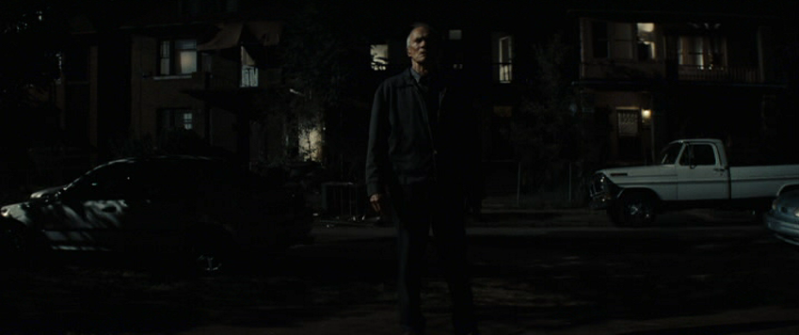
With any luck Gran Torino will be the last film that Clint Eastwood will star in. And I don’t say that because the film is sub-par or because the man is past his prime. No, the film is excellent and Eastwood still has the same power on screen that he’s always had. Instead I hope it will be his last film because it seems like an incredibly fitting curtain call.
Eastwood’s screen heroes have always been gruff and surly. But underneath that hard exterior there’s always been humour and compassion. Whether it’s Blondie offering a dying man a cigar in The Good, the Bad and the Ugly, or Harry Callahan visiting his injured partner in Dirty Harry, or Bill Munny avenging an outrage committed against a prostitute in Unforgiven, Eastwood’s screen heroes, despite the cynicism they might display, are still deeply concerned with truth and justice.
Gran Torino continues this theme. The story revolves around Walt Kowalski, a grizzled Korean War veteran. He’s a curmudgeon and a mealy-mouthed racist, but he still knows what’s right and wrong. He’s a man who will throw out insults like ‘chink’, ‘spook’, ‘gook’ and ‘zipperhead’ with wild abandon, but who, in the end, will stand up for truth and justice in a world that punishes the good and rewards the bad. He’s the sort of man that will tip the balance back in favour of the righteous.
One of my favourite scenes in the film is when he spots one of his neighbours, a young Asian girl called Sue, being attacked by a group of men. Walt drives up to them and gets out of his car. He doesn’t seem concerned that they’re sixty years younger than him and in much better condition. He just growls at them and says he’s not a man to fuck with. He then reaches into his jacket and pretends to reach for a gun. However, all he has are his fingers. But just when they’re about to laugh the crazy bastard off, he reaches again for his jacket and produces a real gun. Even if he is an old man, I’m sure most people would shit themselves like the kids do. With his steely eyes and his gravel-soaked voice, you know that this guy wouldn’t think twice about shooting you. Indeed, as he says in another scene, he’d shoot you and then go home and sleep like a baby.
This scene is one of the most crowd pleasing moments. It reminds you than no other actor can be so effortlessly intimidating as Clint Eastwood. The man oozes authority. But again, the scene also shows the man’s dark sense of humour. In the scene the Asian girl is walking through a rough part of town with her white boyfriend. The boyfriend tries to show some black guys how cool he is and they then proceed to make mincemeat out of him. Needless to say this doesn’t impress Walt. In some great dialogue he tells the white kid that he’s a pussy and asks him whether he’s trying to be ‘super spade’. He then says that it’s no wonder that the black guys don’t want to be his ‘bro’. In Eastwood’s world there’s nothing worse than being a gutless coward.
Gutless is something that Walt can’t be accused of. Single-handedly he stands up to a group of Asian gangsters that make his neighbours’ lives a misery. However, it takes a while for him to warm up to them.
As much as I loved Gran Torino, it is, for the most part, an incredibly predictable film. I mean, Walt may throw out racist insults like they’re going out of fashion, but we know that he’s going to eventually become a teddy bear. And we know that despite the fact that he has a low regard for his young neighbour Thao, they’re going to end up as best buds. Some of it is incredibly formulaic.
But the film is made with such care and love and skill that the predictability doesn’t matter. Every scene is a joy.
For instance, I loved the scene where Walt finally goes and meets his neighbours. It has no right to be a great scene but instead it ends up being quite sweet. Walt eats every piece of food that is offered to him and is charmed by a young girl. Oh, so all Asians aren’t the same? They’re actually individuals like him that have the same hopes, dreams and aspirations. Get out of here!
I also enjoyed the bonding between Walt and Thao. Again, it has the potential to be horrible but it ends up being wonderful. One of the best scenes is when Walt decides he wants to show Thao how grown men speak. With this in mind, Walt takes Thao to his barber. Now Walt and his barber have a unique relationship. They basically spend all their time insulting one another. However, they do it with unspoken affection. And so the give and take between them and the crusty bigotry ends up being a guilty pleasure. These days people usually bottle up all the vile things they think. Walt and his barber though just go ahead and say it. For some reason, there’s something to admire in that. Plus it doesn’t hurt that it’s Eastwood that is saying these things – you know that behind the words there’s an incorruptible decency in him.
But even though Walt eventually comes good and stops calling Thao ‘Toad’, you still get to hear all the racial insults your black heart could hope to hear. And you even get to see Eastwood have what can only be called a spit off with an elderly Asian woman – the Asian woman wins.
Another aspect of the film that really has no right to work is Walt’s strained relationship with his family. His granddaughter doesn’t give a shit about him and just wants to inherit his Gran Torino, his sons don’t understand or like him and his daughter-in-law wants to put him in a home. They’re despicable people, much like the family in Million Dollar Baby. But even though they’re one dimensional caricatures, they still offer some laughs. I couldn’t help but chuckle when they try and convince Walt to go to a retirement home and he just sits there growling, and I was delighted when the granddaughter gets snubbed in Walt’s will. She sits there all smug, thinking that she’s going to get the Gran Torino, but instead it goes to Thao. Take that and stick it up your arse.
Yet another slightly ridiculous element is Walt’s illness. Every now and again he coughs and hacks up blood. In film the mystery cough means death is just around the corner.
Having said that, I didn’t expect Walt to die the way he did. The Asian gang that is making Thao’s life a living hell end up beating and raping his sister and then they do a drive-by on his house. We think that Walt is going to go round to the gangster’s place and kill the shit out of them. I was certainly hoping that he would. But instead he goes there unarmed and gets shot to death. What the fuck? This isn’t your typical Eastwood. This isn’t like Bill Munny gunning everyone down in Unforgiven. What the hell has happened? What’s so heroic about dying? But as it turns out, Walt was thinking clearly. By getting shot in the street, unarmed, he ensures that the gang get to spend the rest of their lives in jail and that his friends Thao and Sue get the peace they deserve. He’s sacrificed himself for the greater good.
The end continues to flirt with the ridiculous – Walt ends up dead on the floor in a cross pose (he’s a martyr, don’t you see?) and at the end Clint even sings a song about a Gran Torino – but it works tremendously well. You’d have to have a hard heart not to get a little choked up.

